JDAI / BHJJ
Juvenile Detention Alternatives Initiative /
Behavioral Health Juvenile Justice
Juvenile Detention Alternatives Initiative
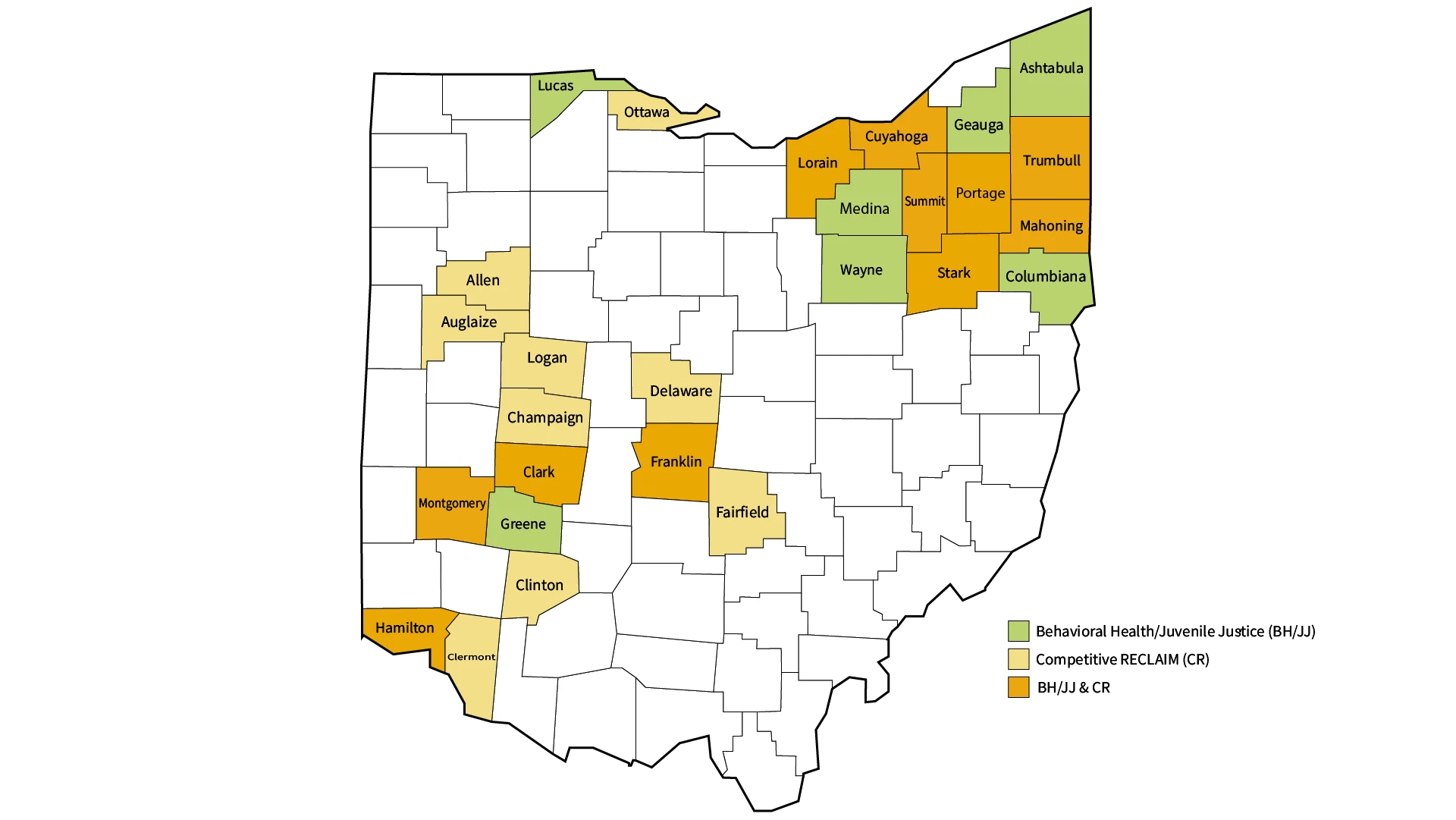
Ohio’s Juvenile Detention Alternatives Initiative (JDAI) strives to eliminate the unnecessary and inappropriate use of secure detention without sacrificing public safety. Currently, nineteen of Ohio's counties belong to a growing membership of juvenile justice practitioners and other system stakeholders across the country utilizing the eight core strategies and working to build a better and more equitable youth justice system. The Annie E. Casey Foundation is credited with the inception of JDAI in 1992, which has grown to become the most widely replicated juvenile justice reform initiative in the United States.
Behavioral Health Juvenile Justice Initiative
The Behavioral Health Juvenile Justice (BHJJ) initiative is a cohort of evidence-based programs designed to identity and divert justice-involved youth with mental health and substance abuse disorders into community-based treatment. Funding for BHJJ is provided by Departments of Youth Services (DYS) and Mental Health and Addiction Services (OhioMHAS) with administrative oversight provided by DYS. The initiative currently supports 10 local programs serving 15 counties. Local project partners at a minimum include the Mental Health and Drug Alcohol Board (Board), juvenile court and a behavioral health provider. Since 2006, the initiative has served over 5,000 youth.
RECLAIM Ohio
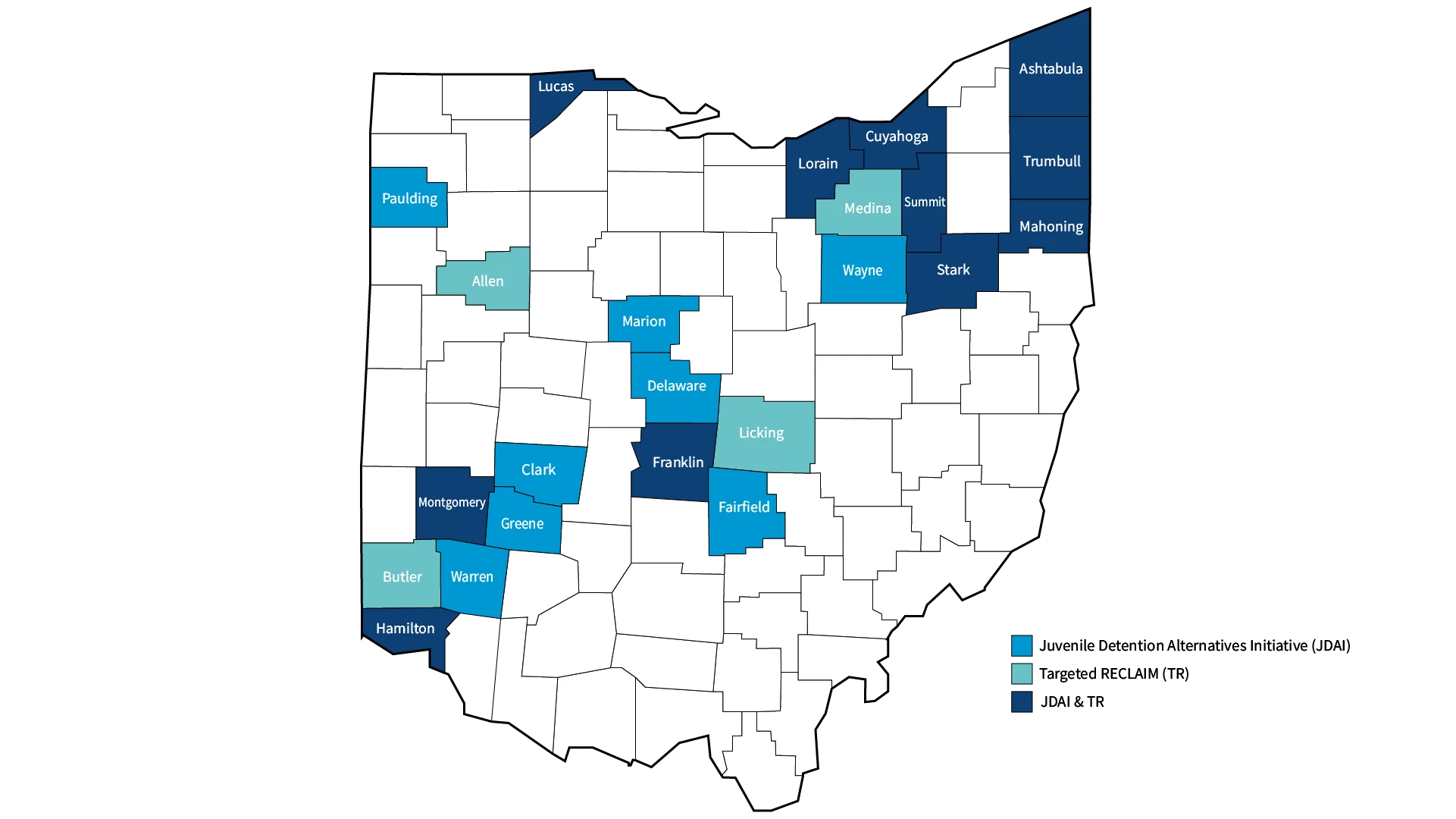
Created by House Bill 152 in July 1993, successfully piloted in 1994, and implemented statewide in January 1995, RECLAIM (Reasoned and Equitable Community and Local Alternatives to the Incarceration of Minors) is a statewide funding initiative and diversion program operated by the Ohio Department of Youth Services (DYS). It encourages juvenile courts to develop or purchase a range of community-based options to meet the needs of each juvenile offender or youth at risk of offending. By diverting youth from Ohio Department of Youth Services (DYS) institutions, courts have the opportunity to increase the funds available locally through RECLAIM. It also operates on a performance-based, financial incentive model that shifts the economic burden and reward to the local county courts.
Allocation Formula: Each county juvenile court receives an annual fiscal allocation based on its average number of felony youth adjudications.
The Deduction Variable: When a judge commits a youth to a DYS secure facility or a Community Corrections Facility (CCF), a predetermined per-diem amount is deducted from the county's RECLAIM allocation.
The Incentive: If the county keeps the youth in the community, it retains the allocated funds. These funds must be used to develop, expand, or purchase local alternative programs (e.g., intensive probation, day treatment, cognitive-behavioral therapy, restitution programs).
Public Safety Exception: Youth committing the most severe violent offenses (e.g., murder, aggravated murder, rape) are categorized as "public safety beds." Counties can incarcerate these offenders in DYS facilities free of charge without facing a deduction from their RECLAIM funds.
2026 © Ohio Social Metrics